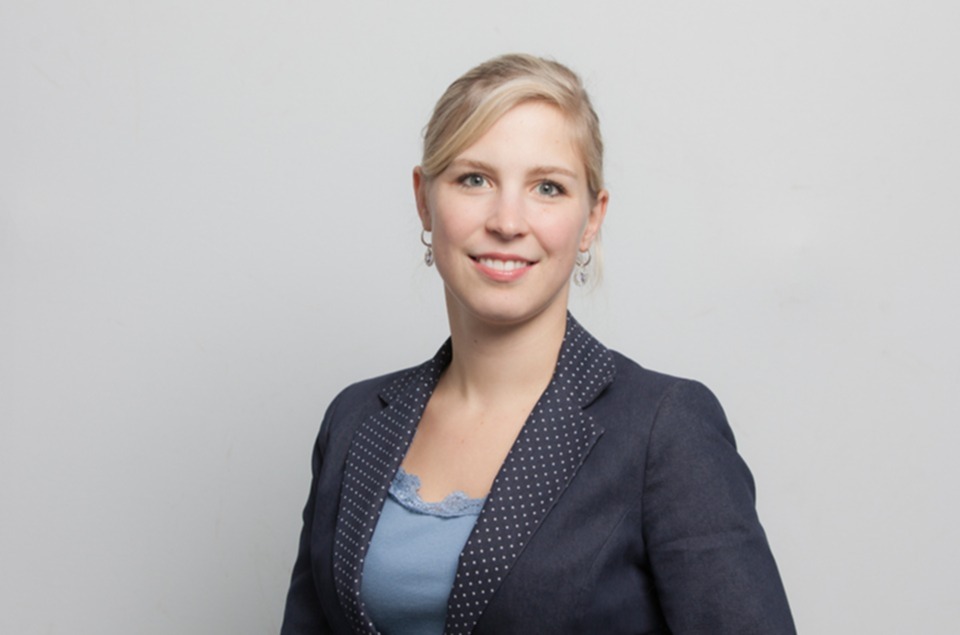
Prof.in Dr. Alexandra Vivien Dorschu
Institut Maschinenbau
Email:
alexandra.dorschu@hs-ruhrwest.de
Telephone:
+49 208 88254-448
Programme Director, Women’s Mechanical Engineering Programme | Field of Expertise: Mathematics, Mechanics & Science Didactics
Person
Prof. Dr Alexandra Vivien Dorschu has been Professor of Mathematics, Mechanics, and Science Didactics at Hochschule Ruhr West in Mülheim since 2017. Previously, she served as Lecturer for Special Tasks and Research Associate in Physics Didactics. She earned her doctorate in 2013 on the influence of contexts in physics competency tests and holds a diploma in Physics from TU Dortmund. Her focus lies in the innovative design of STEM educational formats and the promotion of early-career researchers. |
The best way to reach me is by email at alexandra.dorschu@hs-ruhrwest.de.
| Since 2017 | Professor of Mathematics, Mechanics, and Science Didactics Hochschule Ruhr West |
| 2013–2017 | Lecturer for Special Tasks (Mathematics) Institute of Natural Sciences Hochschule Ruhr West |
| 2010–2013 | Research Associate at the Chair of Physics Didactics University of Duisburg-Essen |
| 2010–2013 | Doctorate (Dr. phil. nat.) in Physics Didactics, Graduate College NWU, Essen Dissertation: “The Effect of Contexts in Physics Competency Test Tasks” |
| 2004–2010 | Diploma Studies in Physics TU Dortmund Diploma Thesis: “Multivariate Analysis for Improving the Signal-to-Background Ratio of Top-Quark Events in the ATLAS Experiment” |
Teaching
- Engineering Mathematics I & II in the Technology and Management programme
- Mechanics in the Technology and Management programme
- Technical Mechanics I & II in the Industrial Engineering – Mechanical Engineering programme
- Blue Science
Alexandra Dorschu adopts a research-based, practice-oriented approach to didactics that promotes sustainable learning and competence development in STEM subjects. With the initiation of the university-wide study entry programme STEP, she focuses on structured transitions into higher education and targeted support during the initial phase of study. In the RuhrFutur project AWIDA (2019–2021), the emphasis was on developing individual study biographies and promoting equitable access to education. Her didactic expertise was further enhanced through the Higher Education Teaching Certificate Programme NRW (HDW). In her teaching, she combines active learning methods, illustrative examples, and evidence-based concepts to strengthen students’ subject knowledge and self-awareness.
The Mechanics Teaching Laboratory centres on research-based learning. Through small, illustrative experiments, students develop fundamental mechanical concepts and deepen their understanding through direct application. The laboratory is an integral part of a practice-integrated exercise programme that systematically links theory and practice. The aim is to promote knowledge transfer and support sustainable learning in engineering education.
Possible thesis topics lie at the intersection of technology, process optimisation, and applied research. Key areas include the analysis and optimisation of mechanical systems, the application of Lean Management methods, and the exploration of practical uses of modern technologies, including Artificial Intelligence. For the empirical investigation of technical or organisational questions, both qualitative and quantitative methods such as interviews and questionnaires may be employed. The aim is to develop well-founded, application-oriented solutions to current challenges in the engineering context. Additional topics include the empirical study of technical processes and the development and evaluation of innovative solutions bridging theory and practice.
Research and Cooperation
Alexandra Dorschu leads the Women’s Mechanical Engineering programme at Hochschule Ruhr West. In addition to shaping the curriculum, she actively advocates for the visibility and advancement of women in technical professions through targeted public relations, personalised support, and practice-oriented teaching.
Alexandra Dorschu’s research focus is in science and technology didactics. She investigates how context-based tasks enhance the understanding of physical concepts and how competencies in STEM subjects can be purposefully developed. A central concern is the evidence-based design of teaching and learning formats, with a particular emphasis on higher education. Additional focuses include accompanying research on educational programmes and the promotion of early-career researchers through innovative supervision and qualification formats.
(Excerpt):
Journals/Books:
- Alexandra Dorschu (2013). Die Wirkung von Kontexten in Physikkompetenztestaufgaben. Logos Verlag Berlin
- Helena Van Vorst, Alexandra Dorschu, Sabine Fechner, Alexander Kauertz, Heiko Krabbe, Elke Sumfleth (2014) Charakterisierung und Strukturierung von Kontexten im naturwissenschaftlichen Unterricht - Vorschlag einer theoretischen Modellierung, Zeitschrift für Didaktik der Naturwissenschaften, Springer Berlin Heidelberg, DOI10.1007/s40573-014-0021-5
- Karsten Lensing, Kristina Dietrich, Silke Frye, Joachim Friedhoff, Alexandra Dorschu, TobiasHaertel (2018): Introducing first year non-experienced mechanical engineering students to an action-oriented approach of a machining license, Procedia Manufacturing, 23, S. 159-164
Conference Proceedings Contributions:
- Alexandra Dorschu. Alexander Kauertz, Hans E. Fischer, Albrecht Bremerich-Vos (2010), Auswahl von Kontexten für Leistungstests, In Höttecke, D. (Hrsg.), Gesellschaft für Didaktik der Chemie und Physik: Naturwissenschaftliche Bildung als Beitrag zur Gestaltung partizipativer Demokratie (S. 492-494), Berlin: Lit. Verlag
- Alexandra Dorschu, Heiko Krabbe, Alexander Kauertz, Hans E. Fischer (2012). Kontexte in Kompetenztests: Charakterisierung und Auswahl, In Bernholt, S. (Hrsg.), Gesellschaft für Didaktik der Chemie und Physik: Konzepte fachdidaktischer Strukturierung für den Unterricht (S. 173-175), Berlin: Lit. Verlag.
- Alexandra Dorschu, Heiko Krabbe, Alexander Kauertz, Hans E. Fischer (2013). Kontexte in Kompetenztests: schwierigkeitserzeugende Faktoren. In Bernholt, S. (Hrsg.), Gesellschaft für Didaktik der Chemie und Physik: Inquiry-based Learning – Forschendes Lernen
- Alexandra Dorschu, Miriam Kleine-Boymann, Heiko Krabbe, Hans E. Fischer (2013). Darstellungsformen in Kompetenzaufgaben, In Bernholt, S. (Hrsg.), Gesellschaft für Didaktik der Chemie und Physik
- Alexandra Dorschu, Jürgen Vorloeper (2013). Diagnose und individuelle Förderung in einem mathematischen Grundlagen-Tutorium, Workshop Mathematik in den Ingenieurwissenschaften
- Katja Plicht, François Deuber, Hendrik Härtig, Alexandra Dorschu (2019): Förderung der Problemlösekompetenz von Ingenieurstudierenden, GDCP, Wien
- Melanie Herzig, Stefan Habel, Martin Lang, Alexandra Dorschu (2020): Projektbasiertes Lernen zur Motivation von Erstsemesterstudierenden, GDCP, online
- Kristina Lampe, Martin Lang, Alexandra Dorschu (2020): Entwicklung eines eLearning Tools zur Förderung der Modellierungskompetenz, GDCP, online
- Kristina Lampe; Martin Lang; Alexandra Dorschu (2020): Development and implementation of an e-learning tool for technical mechanics to promote transfer knowledge of engineering students, SEFI, online
- Katja Plicht, Hendrik Härtig, Alexandra Dorschu (2020): Aufgabenanalyse und Worked-Examples als Basis eines Strategietrainings, GDCP, online
- Katja Plicht, Hendrik Härtig, Alexandra Dorschu (2020): Teaching problem solving skills by strategy trainings in physics, SEFI, online
- Melanie Herzig, Stefan Habel, Martin Lang, Alexandra Dorschu (2020): Influence of projectbased learning on motivation of first-year students in energy engineering, SEFI, online
- Katja Plicht, Hendrik Härtig, Alexandra Dorschu (2021). Operationalisierung und Evaluation von Problemschemata in der Mechanik, GDCP, online
- Katja Plicht, Hendrik Härtig, Alexandra Dorschu (2023). Problemlösestrategien statt Rechnen? Evaluation eines Übungskonzepts, GDCP, Aachen
- Melanie Kitzig, Martin Lang, Alexandra Dorschu (2023). Sustainable energy-efficient living a first year project-based workshop for energy engineers, SEFI, Dublin
- Kristina Lampe, Martin Lang, Alexandra Dorschu (2023). Development and evaluation of a teaching concept that focuses on increasing modeling competence in Technical Mechanics (TM), SEFI, Dublin
- Kristina Lampe, Martin Lang, Alexandra Dorschu (2024). Development and implementation of an e-learning tool for Technical Mechanics to promote transfer knowledge of engineering students, SEFI, Enschede
- Kristina Lampe, Martin Lang, Alexandra Dorschu (2025). Evaluation of a strategy training to promote mechanical- mathematical modeling competence in problem solving in Technical Mechanics 1, Proceedings of the 52nd Annual Conference of SEFI, Lausanne
University Administration
Deputy Member of the Faculty Council
Offers
Since 2022, Alexandra Dorschu has been leading the certificate programme engineering4Girls, which annually offers up to 15 schoolgirls the opportunity to explore mechanical engineering over the course of a year through a variety of formats. (Information flyer)
In the mechanics laboratory, school classes can learn the basics of mechanics or the CO₂ cycle in an engaging way. Through experiments and models, students explore topics such as trusses, forces, and energy conversion.